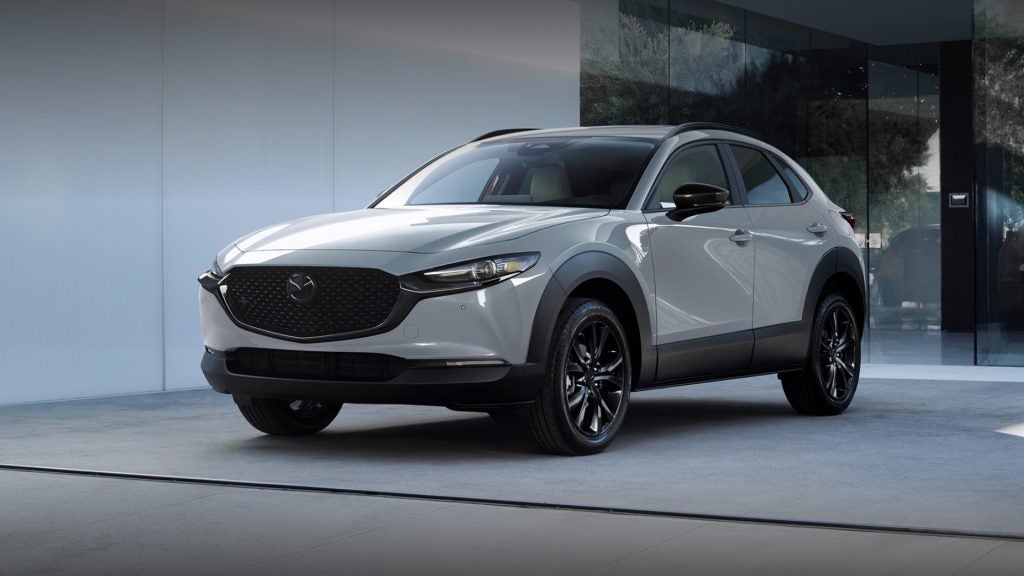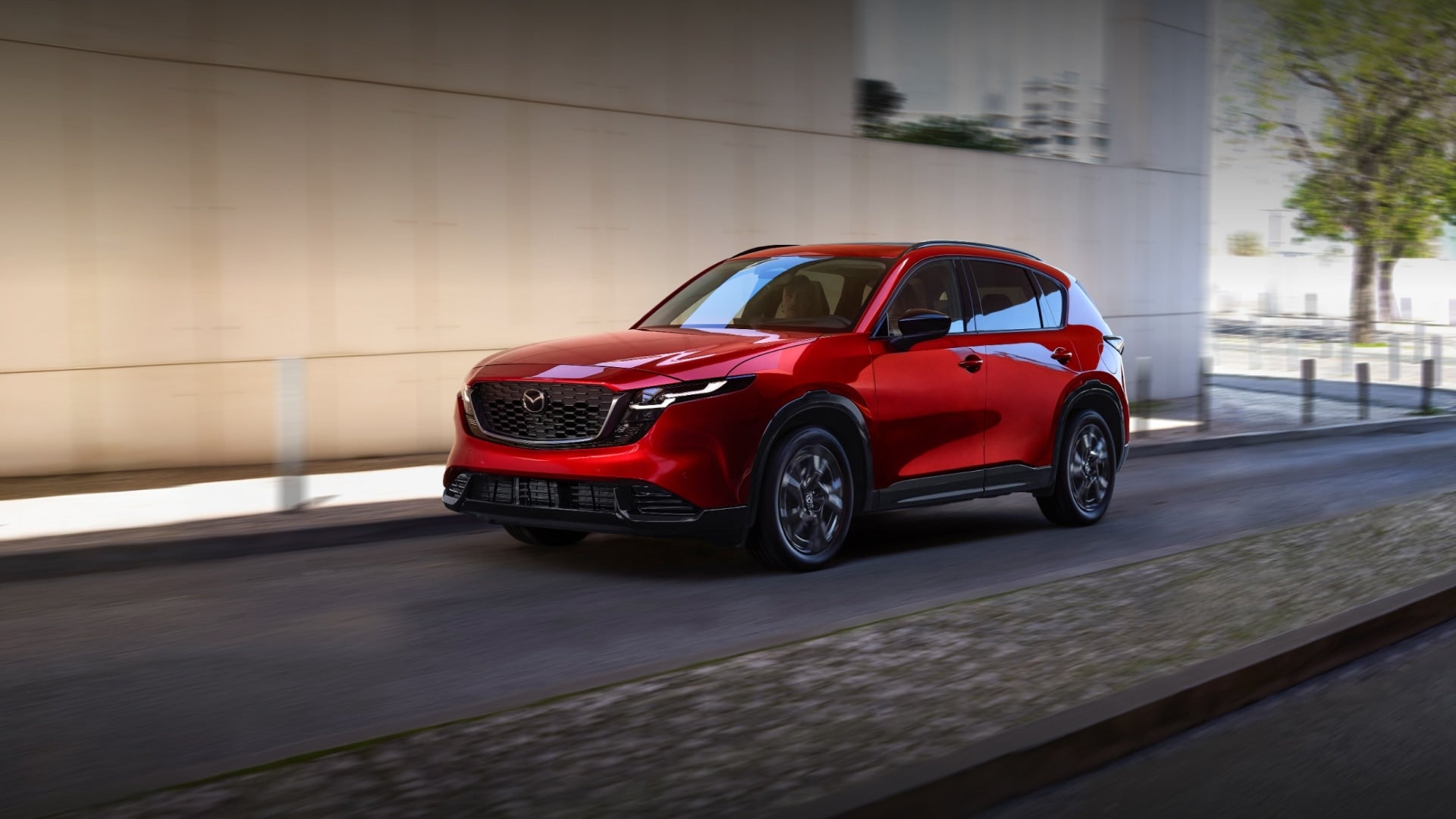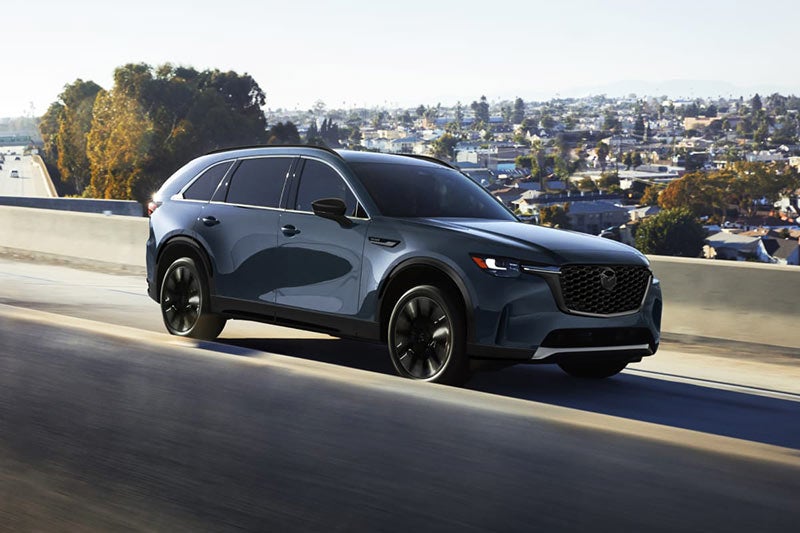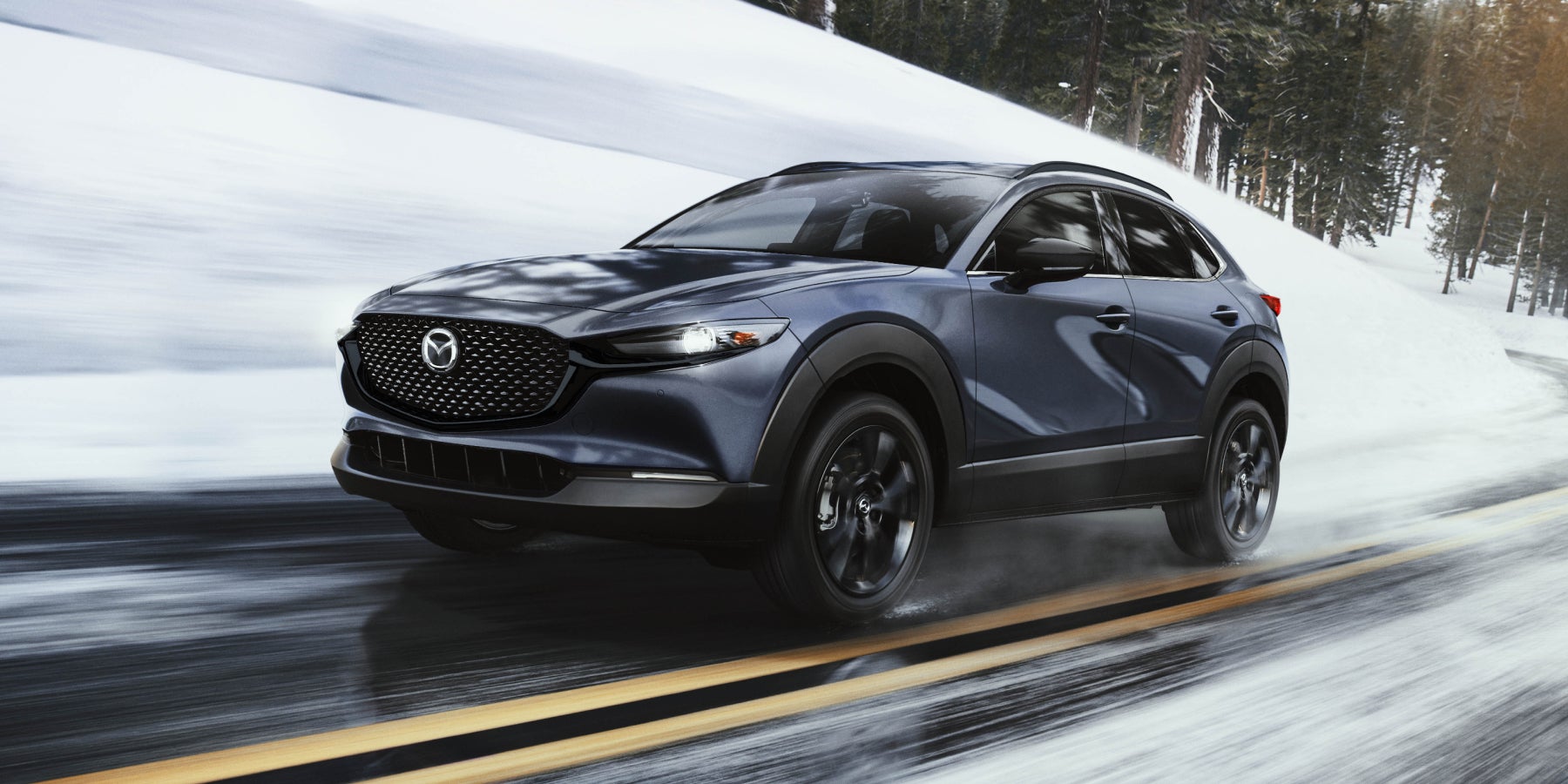
Rochester gets about 53 inches of snow in a normal winter, and plenty of it blows across US-52 or freezes into a glaze at the next stoplight. Your tires are the only part of your Mazda touching any of it. Here's a plain guide to when to switch, which tire fits the way you drive, what Mazda says about AWD and winter tires, and whether studs are legal here. When should you put winter tires on in Rochester? Tire makers like Michelin use a simple rule: 45°F. Once average daily temperatures settle around or below that, the rubber in all-season tires starts to stiffen and lose grip, even on dry pavement. Winter tires use a softer compound that stays flexible in the cold, plus extra sipes (small slits in the tread) that bite into snow. Here's what that rule looks like in Rochester. Using NOAA's 1991-2020 normals for Rochester International Airport, the average daily temperature drops below 45°F around the third week of October and doesn't climb back above it until mid-April. The normal daytime high slips under 45°F around November 10. So aim to have winter tires on between late October and mid-November, and plan to swap back in mid-April. Don't rush the spring change. March still averages about 8.6 inches of snow here, and April averages more than 3. Winter, all-weather or all-season: which fits your drive? Winter tires have the softest rubber and deepest tread, and they grip best on ice and packed snow. They're the pick if you drive every day no matter what the forecast says. All-weather tires carry the three-peak mountain snowflake symbol, which means they passed a severe-snow traction test. You can leave them on all year. They're a good middle ground if you mostly drive in town and can wait out the worst storms. All-season tires are fine from spring through fall, but they aren't built for packed snow or ice. If you'll be driving on snow and ice, Mazda's own owner's manuals recommend switching to snow tires for the winter months. Think about your commute, too. If you drive in from Byron, Stewartville, Pine Island or Zumbrota, you know how fast snow drifts across US-52, Highway 14 and US-63 once the wind gets going over open fields. That's the kind of drive where dedicated winter tires earn their keep. Does a Mazda with AWD still need winter tires? Yes, and Mazda says so itself. Every Mazda crossover comes standard with i-ACTIV AWD, which watches for wheel slip and sends power to the rear wheels before you'd notice a problem. That's a real help getting up a snowy driveway or pulling away from a light. We cover how it works in our post on Mazda AWD for Minnesota driving. But AWD helps you go. It doesn't help you stop or turn. That's the tires' job. Mazda's own guide to AWD vs. 4WD says an AWD vehicle on all-season tires may accelerate better than a two-wheel drive car on winter tires, but the car on winter tires will stop and change direction noticeably better on snow and ice. AWD plus winter tires beats either one alone. Mazda's rules for winter tires Your owner's manual has a few tire rules that matter more on an AWD Mazda than most people expect: Put winter tires on all four wheels. Mazda's manuals say to use snow tires on all four and not to mix tire types. Keep all four matched. On i-ACTIV AWD models, Mazda says all four tires should be the same size, brand and tread pattern. Tires that differ in size, even from uneven wear, can limit how the AWD works or damage it. Use the size on your door jamb label. Not sure how to read it? Our guide to reading tire sizes walks through it. Are studded tires legal in Minnesota? For most of us, no. Minnesota Statute 169.72 bans studs on tires driven on public roads, with a few narrow exceptions. Drivers from states that allow studs can use them while they're only here occasionally, which the law caps at 30 days in any six-month period. Rural mail carriers on mostly unpaved routes can apply for a permit. One detail matters a lot near the Iowa and Wisconsin borders. If you work or go to school in Minnesota, you can't use studs here, even if your car has out-of-state plates. Tire chains are allowed when conditions call for them, but for daily driving around Rochester, studless winter tires are the answer. Check your tires before the next storm Tread depth. Put a penny in the tread with Lincoln's head upside down. If you can see the top of his head, you're at or below 2/32 inch and need new tires. Many winter tires also have wear bars molded into the tread that show when snow grip is fading. Our post on signs it may be time to replace your tires covers what else to look for. Tire pressure. Pressure drops about 1 PSI for every 10°F the temperature falls. A tire set on a 70°F fall day can be 6 PSI low on a 10°F January morning. Check monthly when the tires are cold, and fill to the number on your driver's door jamb, not the maximum printed on the tire. The rest of the car. Tires are one piece of winter prep. Our winter checklist covers your battery, coolant and oil. Winter tires at Rochester Mazda Our tire service team can inspect your tires during routine maintenance, rotate them, and install replacement tires with factory-recommended mounting, balancing and air pressure. You can also browse the Mazda Tire Center to see tires that fit your exact Mazda, and it's worth a look at our Service & Parts Specials before you book. Ready to switch? Schedule service online or call our service department at 507-424-6520. We're at 2955 48th Street NW in Rochester, and you can always send us a question. Shopping for a new Mazda this winter? The 2026 CX-5, 2026 CX-50 and 2026 CX-50 Hybrid all come with standard all-wheel drive. Winter tire questions we hear in Rochester Are all-weather tires good enough for a Rochester winter? They can be, for the right driver. All-weather tires with the three-peak mountain snowflake symbol passed a severe-snow traction test and can stay on all year. If you mostly drive in town and can wait out the worst storms, they're a sensible choice. If you commute on open highways or head out early no matter the weather, dedicated winter tires still grip better on ice and packed snow. Can I leave winter tires on all year? We don't recommend it. The soft rubber that grips so well in January wears quickly on warm pavement. Swapping back around mid-April, once Rochester's average daily temperature stays above 45°F, helps a set of winter tires last more seasons. Do winter tires help a front-wheel drive Mazda3? Yes, a lot. Stopping and turning on snow and ice depend on tire grip, not on which wheels get power. Mazda points out that a two-wheel drive car on winter tires stops and turns noticeably better on snow and ice than an AWD vehicle on all-season tires. I live in Iowa or Wisconsin but work in Rochester. Can I use studded tires? No. Minnesota law says anyone who works or goes to school in Minnesota can't drive here on tires that would be illegal on a Minnesota-registered vehicle, no matter where the car is registered. Studless winter tires are the way to go.
Used Mazda CX-5 vs. CX-50: Two Interpretations of the Compact SUV
Good automotive design involves more than attractive sheet metal. Proportions, seating position, visibility, and the relationship between driver and machine determine how a vehicle feels long after its appearance becomes familiar. The Mazda CX-5 and CX-50 demonstrate this distinction particularly well. Both offer capable engines, standard AWD, and thoughtfully designed interiors, yet their characters differ. For drivers exploring pre-owned SUVs at Rochester Mazda in Rochester, MN, these present two compelling choices. Different Proportions, Different Personalities The CX-5 has a compact, upright profile that suits urban driving. Its relatively short wheelbase contributes to maneuverability, while the suspension delivers composed handling and comfortable road manners. The CX-50 takes a different direction. Its longer wheelbase, wider stance, and lower roofline create a more planted appearance, reinforced by protective body cladding and available outdoor-oriented equipment. Ground clearance reaches 8.6 inches on certain CX-50 configurations, compared with approximately 7.6 inches for the CX-5. The difference becomes significant on uneven access roads, although neither vehicle should be mistaken for a dedicated off-road machine. Familiar Engines with Distinct Capabilities Both SUVs offer a naturally aspirated 2.5L four-cylinder producing 187 hp and 186 lbs. ft. of torque. Available turbocharged versions deliver 227 hp and 310 lbs. ft. of torque on regular gasoline, increasing to 256 hp and 320 lbs. ft. of torque with premium fuel. A six-speed automatic transmission accompanies these gasoline engines, providing conventional shifting characteristics. Mazda's i-Activ AWD comes standard across both lineups for 2023–2025. The CX-50 adds Mazda Intelligent Drive Select with an Off-Road mode, supporting traction management beyond paved surfaces. Properly equipped turbocharged CX-50 models tow up to 3,500 lbs., while the CX-5 reaches 2,000 lbs. The CX-50 Hybrid Changes the Equation For 2025, Mazda introduced a CX-50 Hybrid featuring a 2.5L gasoline engine and electric motors producing 219 combined hp. An electronically controlled continuously variable transmission and standard electric AWD distinguish it from the conventional gasoline versions. EPA-estimated fuel economy reaches 39 MPG city, 37 MPG highway, and 38 MPG combined. That represents a substantial efficiency advantage for drivers covering significant distances around Rochester. Buyers comparing used Mazda CX-50 Hybrid models should also consider the different driving characteristics and equipment available with this powertrain. Cabin Design and Cargo Space Both models accommodate 5 passengers, with available leather seating, premium materials, and carefully arranged controls. The CX-5 emphasizes a comfortable driving position and a cabin that feels closely organized around its occupants. The CX-50 offers slightly greater rear legroom and a longer cargo floor, particularly helpful for outdoor equipment. Cargo volume measures approximately 30.8 cubic feet behind the CX-5's rear seats and 59.3 cubic feet with them folded. Gasoline CX-50 models provide approximately 31.4 and 56.3 cubic feet, respectively. Available 10.25-inch displays, smartphone connectivity, and Bose audio further distinguish individual trims. Safety and Pre-Owned Vehicle Considerations Both SUVs include Mazda i-Activsense technologies such as Smart Brake Support, Blind Spot Monitoring, and Lane-Keep Assist. The 2023 CX-5 and CX-50 earned IIHS TOP SAFETY PICK recognition, while qualifying 2024–2025 CX-50 models received TOP SAFETY PICK+ awards under revised testing standards. When shopping pre-owned, inspect maintenance records, tire condition, accident history, and remaining warranty coverage. Equipment varies considerably across trims and model years, making a careful comparison of used Mazda CX-5 and CX-50 features especially worthwhile. Explore Both SUVs at Rochester Mazda The CX-5 rewards drivers who prioritize compact dimensions, comfortable handling, and maximum folded-seat cargo volume. The CX-50 offers a broader stance, greater available towing strength, and a hybrid option for improved efficiency. Visit us in Rochester, MN, to compare used Mazda inventory and eligible Mazda Certified Pre-Owned vehicles. A test drive in each reveals how their proportions, steering responses, and seating positions translate into two distinctly different driving experiences.